
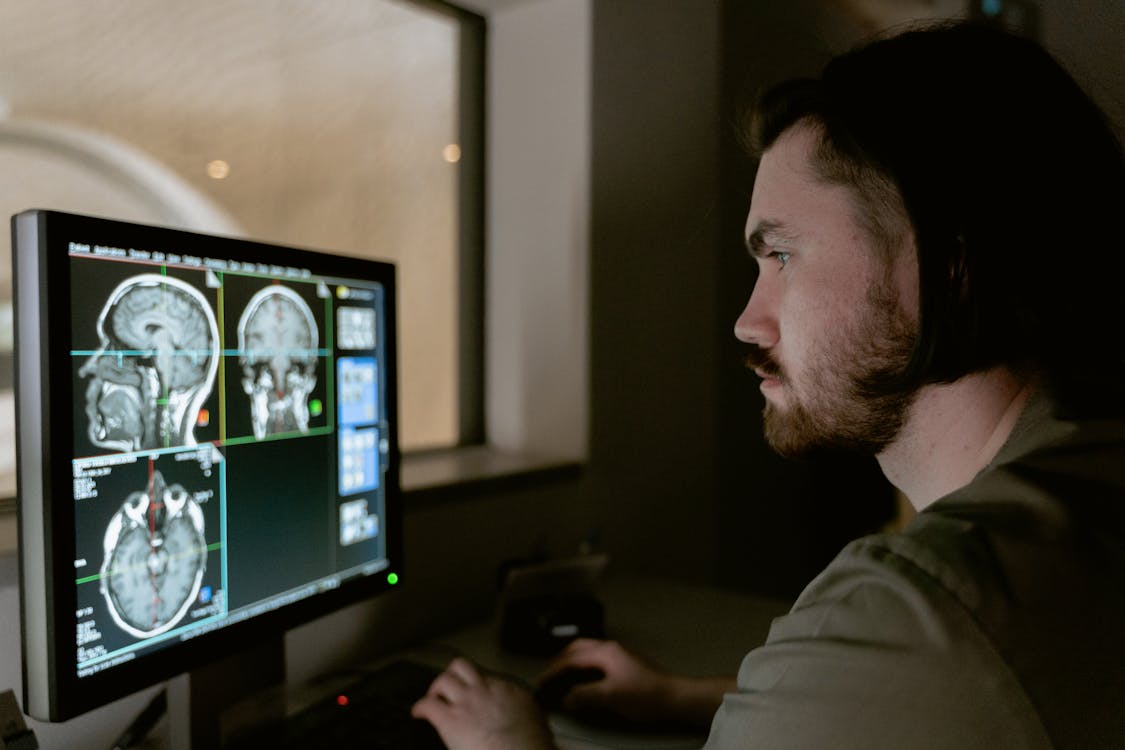
In a groundbreaking development that is poised to revolutionize the field of healthcare, researchers have unveiled a cutting-edge AI-powered medical diagnostics system capable of detecting diseases with unprecedented accuracy. This transformative technology, developed after years of rigorous research and development, promises to significantly enhance early disease detection, improve patient outcomes, and streamline healthcare processes.
The heart of this innovative system lies in its advanced artificial intelligence algorithms, which have been trained on massive datasets comprising diverse medical information, diagnostic images, and patient records. These algorithms, designed to mimic human cognitive processes, are now proving to be more effective than traditional diagnostic methods in identifying a wide range of medical conditions.
Dr. Emily Harris, lead researcher on the project and a renowned expert in medical artificial intelligence, explained the significance of this breakthrough in an exclusive interview. "Our goal was to create a diagnostic tool that could complement and augment the capabilities of healthcare professionals. The AI system we've developed has demonstrated an unparalleled ability to analyze complex medical data swiftly and accurately, providing clinicians with valuable insights that can inform timely and precise treatment decisions."
One of the key strengths of this AI-powered diagnostics system is its versatility. It is capable of analyzing various types of medical data, including radiological images, pathology reports, and genetic information. The system's ability to integrate and interpret diverse data sources enables it to offer a comprehensive and holistic view of a patient's health, aiding healthcare providers in making more informed decisions.
The diagnostic process is expedited through the system's rapid analysis of medical images. Whether it's identifying abnormalities in X-rays, CT scans, or MRI images, the AI system outperforms traditional methods by quickly and accurately pinpointing areas of concern. This accelerated diagnosis is particularly critical in cases where time is of the essence, such as detecting the early stages of cancer or assessing the severity of cardiovascular conditions.
To ensure the accuracy and reliability of the AI-powered diagnostics, the research team collaborated with a consortium of medical professionals, radiologists, and pathologists. The system underwent rigorous validation processes using real-world patient data, and the results were compared against those of experienced human diagnosticians. The AI system consistently demonstrated a high level of accuracy, often surpassing human capabilities in detecting subtle abnormalities and making nuanced diagnostic decisions.
The impact of this technology on patient outcomes cannot be overstated. With early and accurate detection of diseases, individuals can receive prompt and targeted interventions, leading to more effective treatments and improved prognosis. Dr. Sarah Rodriguez, a practicing oncologist who participated in the validation studies, expressed her enthusiasm for the potential of this technology in cancer diagnosis.
"As an oncologist, I am particularly excited about the implications for cancer detection. The AI system's ability to identify subtle changes in medical imaging, coupled with its proficiency in analyzing genetic data, opens up new possibilities for early cancer detection and personalized treatment plans. This could be a game-changer in the fight against cancer."
The adoption of AI-powered medical diagnostics is already underway in leading healthcare institutions. Several pilot programs have been launched to assess the feasibility and integration of this technology into existing clinical workflows. Initial feedback from healthcare professionals involved in these programs has been overwhelmingly positive, with many expressing confidence in the system's ability to enhance diagnostic accuracy and efficiency.
The implementation of this technology has not been without challenges. Concerns around data privacy, ethical considerations, and the potential impact on employment in the healthcare sector have been raised. Dr. Harris acknowledged these concerns and emphasized the importance of addressing them proactively.
"We understand the ethical considerations surrounding AI in healthcare. It is crucial to establish robust safeguards to protect patient privacy and ensure responsible use of this technology. Additionally, rather than replacing healthcare professionals, our goal is to empower them with tools that augment their expertise and improve patient outcomes."
As the AI-powered diagnostics system continues to gain traction, researchers are exploring potential applications beyond traditional medical imaging. The system's ability to analyze vast datasets quickly makes it well-suited for population health studies, epidemiological research, and identifying patterns in large-scale health data. This opens up new avenues for understanding and addressing public health challenges on a broader scale.
The road ahead involves further refinement of the AI algorithms, continued collaboration with healthcare professionals, and addressing regulatory considerations for widespread adoption. Industry experts anticipate that this transformative technology will pave the way for a new era in healthcare, marked by personalized medicine, early disease interception, and improved overall health outcomes for individuals and communities.
In conclusion, the unveiling of the AI-powered medical diagnostics system represents a watershed moment in the intersection of technology and healthcare. With its unprecedented accuracy, speed, and versatility, this technology is poised to redefine diagnostic practices, empower healthcare professionals, and ultimately enhance the quality of care for patients around the world. The journey from research and development to real-world implementation marks a significant step forward in the ongoing evolution of healthcare, promising a future where early disease detection becomes not just a possibility but a routine reality.
إرسال تعليق