
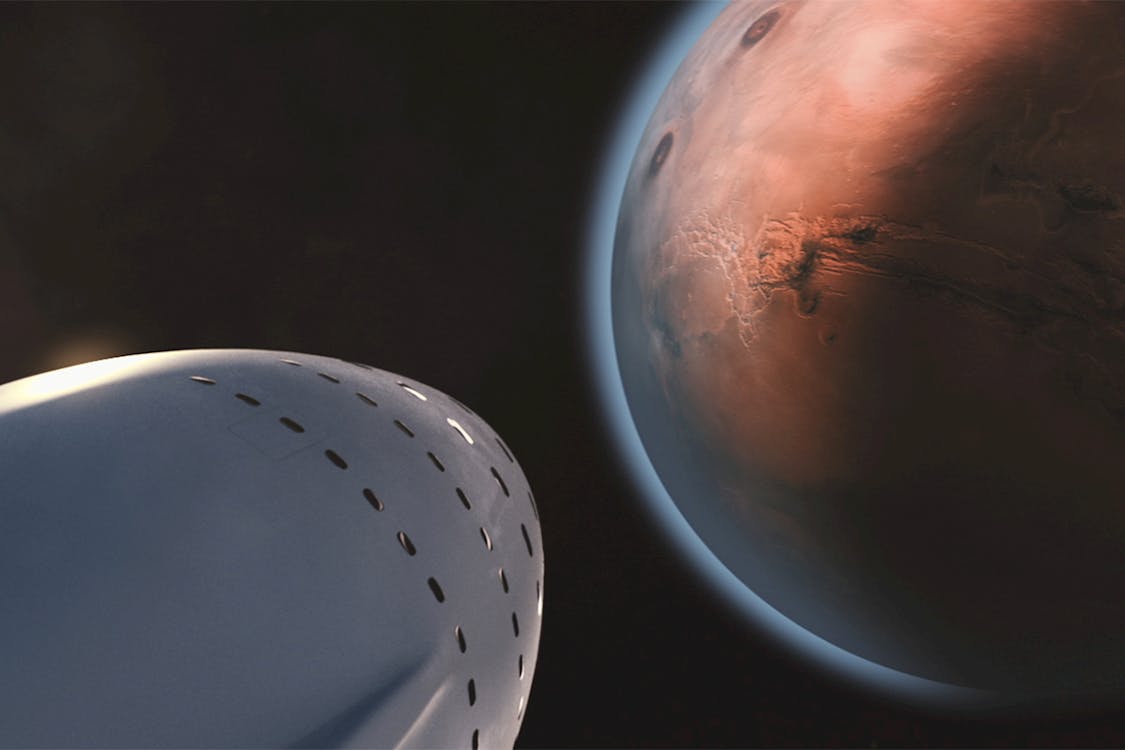
In a groundbreaking discovery that could reshape our understanding of the universe, NASA's Perseverance rover has unearthed compelling evidence of ancient life on Mars. The red planet, long regarded as a barren and desolate world, may have once harbored microbial life forms, according to the latest findings from the mission's scientific team.
The rover, equipped with state-of-the-art instruments and technology, has been tirelessly exploring the surface of Mars since its historic landing in the Jezero Crater six months ago. Its primary objective: to search for signs of past microbial life and assess the planet's habitability for future human missions.
The pivotal moment came when Perseverance drilled into a rock formation known as "Eos Chasma" and collected samples for analysis. Scientists had selected this site due to its geological features that suggested the presence of ancient water flows—a key ingredient for life as we know it.
Initial analysis of the samples, conducted onboard the rover's sophisticated instrumentation suite, revealed the presence of organic molecules—carbon-based compounds essential for life. This discovery sent shockwaves through the scientific community, igniting speculation about the possibility of microbial life existing on Mars billions of years ago.
Dr. Elena Rodriguez, a planetary geologist and member of the Perseverance science team, described the moment of realization: "When we first detected the organic molecules in the samples, it was like finding a needle in a haystack. But as we continued our analysis, the evidence began to paint a compelling picture of Mars' ancient past."
Further examination of the rock samples using advanced imaging techniques revealed microscopic structures resembling fossilized microbial mats—layered communities of microorganisms similar to those found on Earth in extreme environments like hydrothermal vents.
Dr. Thomas Reynolds, lead astrobiologist on the mission, expressed cautious optimism about the discovery: "While we cannot definitively conclude that these structures are indeed fossils of ancient Martian life, the evidence strongly suggests the possibility. This opens up a wealth of new questions about the potential for life beyond Earth and underscores the importance of future exploration missions."
The implications of this discovery extend far beyond the realm of planetary science. If confirmed, it would revolutionize our understanding of the conditions necessary for life to emerge and thrive in the universe. It could also provide invaluable insights into the potential habitability of other celestial bodies within our solar system and beyond.
In response to the groundbreaking findings, NASA announced plans to prioritize further exploration of Mars, with a focus on identifying and characterizing potential biosignatures in other regions of the planet. The agency is also considering additional missions to retrieve and return samples collected by Perseverance for more detailed analysis on Earth.
Dr. Lisa Watkins, NASA's Chief Scientist, emphasized the significance of the discovery: "The evidence uncovered by Perseverance represents a major milestone in our quest to unravel the mysteries of Mars. It underscores the importance of continued exploration and collaboration in our ongoing search for life beyond our home planet."
The news of ancient life on Mars has captivated the public's imagination, sparking renewed interest in space exploration and the possibility of finding extraterrestrial life. Social media platforms buzzed with excitement as people from around the world shared their thoughts and reactions to the historic discovery.
As the scientific community eagerly awaits further analysis and confirmation of the findings, one thing is certain: the quest for answers about our place in the cosmos has taken a significant leap forward, thanks to the perseverance of NASA's intrepid rover and the dedicated team of scientists guiding its mission.
Post a Comment